Nagasaki

Durch den bewölkten Himmel über der Insel Kyushu aus östlicher Richtung sich langsam nach dem Westen bewegend fliegt der B29 Bomber “Boxcar”. Es ist der 9. August 1945. Eine Weile zuvor hatte das Flugzeug die von einer dicken Wolkenschicht verhüllte Stadt Kyoto überflogen, eines der wichtigsten Zentren der japanischen Rüstungsindustrie. Auch die Stadt Kyoto ist als Hauptziel zur Vernichtung durch den Abwurf der zweiten Atombombe vorgesehen. Aber die undurchsichtige Wolkendecke schützt die Stadt und schenkt ihr dadurch eine zweite Chance, ihr Leben zu erhalten. Die etwas westlich gelegene Stadt Nagasaki, eingeplant als Ausweichziel, erfährt damit ihr grausames Ende.
Vor einigen Stunden hat die B29 “Bockscar” welche dem 509. Gemischten Bataillion angehörte, seinen Standort, den Tinian Air Base Fliegerhorst auf den Mariana Inseln, verlassen. Dort wurde dem Bomber am 6. August laut Gefechtsbefehl Nr. 17 des US-Luftwaffenhauptquartiers in Guam die Atombombe unter die Flügel gehängt.
Nach drei Rundflügen von 360 Grad hat der B29-Bomber sein Ausweichsziel, die Hafenstadt Nagasaki, geortet, und der Pilot nimmt die Stadtmitte ins Visier.

Die Uhr zeigt 11.00 Uhr und 2 Sekunden!
Das ist die Zeit, da die Lebensuhr für 130 000 Menschen stehen bleibt. Der Moment, da die zweite Atombombenexplosion unter einer riesenhaften Pilzwolke in einem kilometerweiten Radius um sein Hypozentrum alles Lebende zur Asche verwandelte.
Es war dieser zweite Atombombenabwurf, welcher den Kampfgeist des japanischen Oberkommandos zum weiteren Widerstand zerbrach. Amerikas Eintritt in den 2. Weltkrieg erfolgte nach dem Luftangriff der Japaner auf seine Pazifikflotte am 7. Dezember 1941 im Hafen von Pearl Harbor. Die Bombe auf die Hafenstad Nagasaki zwang den letzten Kriegsteilnehmer zu kapitulieren. Damit endete der blutigste aller in der Geschichte der Menschheit geführten Kriege.
                                   Epilog:
Tausende Hydrangeas, die Blume im Stadtwappen von Nagasaki, blühen in den Parkanlagen und Blumenbeeten, und kennzeichnen das Atombomben-Museum und die Gegend um das Atombomben-HYPOCENTER.
Bienen summen, fliegen von Blume zu Blume, und Vögel singen in den Bäumen zu dem Plätschern der Wasserfälle, wo Menschen mit ernsten Gesichtern lautlos hindurchwandern. Das alles vermittelt der Welt eine friedvolle Ruhe. Doch dutzende Denkmäler, gestiftet von vielen Ländern der Welt und Friedensvereinen, deuten und weisen hin auf das teuflische Menschwerk. Sie zeigen den Besuchern, daß auf der Erde, auf welcher sie sich jetzt bewegen, eine riesige atomare Pilzwolke eine einst lebensvolle Stadt in Sekunden in den weltgrößten Friedhof verwandelte.

Coming from the easterly direction thru the scattered clouds moving slowly to the west over the island of Kyushu is the B 29 bomber “Boxcar”. It is August 9,1945. The plane had just over flown the in shroud of clouds blanketed city of Kyoto, japans center of military arms production.

Kyoto, the intended primary target of the second atomic bomb, received thanks for the clouds to be spared to die, and received the second chance to live.
 

Nagasaki instead is doomed for its fatal end.
Few hours ago, the B29 “ Bockscar, ( after its pilot Fredrick C.Bock ) belonging to the 509 mixed battalion, has left the Tinian Air Base in the Mariana Islands, were on August 6,1945, according to field order # 17 issued from the 20th Air Force headquarters on Guam, the corpus of the atomic bomb had been mounted below its wings.
 

Now, after completing the 360-degree circle for the third time, the B 29 Bomber has located its secondary intended target, the city of Nagasaki and the pilot zeros in on the cities center. The time is 11:00 AM and 2 seconds.

This is the time were the clock stopped ticking for over 130 000 lives, when the worlds second atomic explosion converted in a huge mushroomed cloud all living matter miles from the Atomic Bomb Hypocenter into ashes.

It was this second atomic bomb, which broke the will of the Japanese High Command to continue to fight. America’s entry into World War II began with the bombing of the port city of Pearl Harbor on December 7, 1941. The bombing of the port city Nagasaki forced the last combatant to surrender, thus ending the bloodiest of all recorded wars in human history to end.

                                         Epilog:

Thousands  Hydrangeas, Nagasaki’s city flower, are blooming in the park and flowerbeds of the Atomic Bomb Museum and the entire area, which pinpoints the Atomic Bomb Hypocenter. The bees flying from flower to flower and birds singing in the trees, the noise of the water falls, and people walking quietly with somber faces between them, they all suggest a tranquility of a world in peace. Only the dozens of monuments donated from countries of the world and peace groups, to be a reminder on man’s devilish capabilities are pointing, that they are moving on top of a soil in an area, which in seconds was converted by a giant mushroomed cloud, from a vibrant city instantly into the worlds largest, concentrated cemetery.

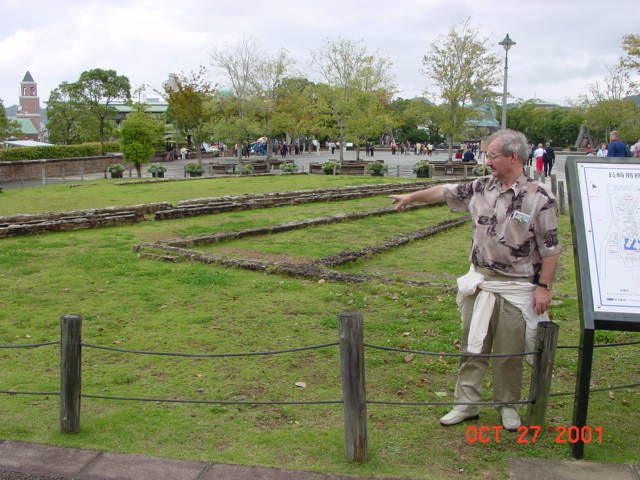
Die Überreste der Fundamente des Gefängnisses in Nagasaki

The remaining foundation of Nagasaki's prison within the Hypocenter

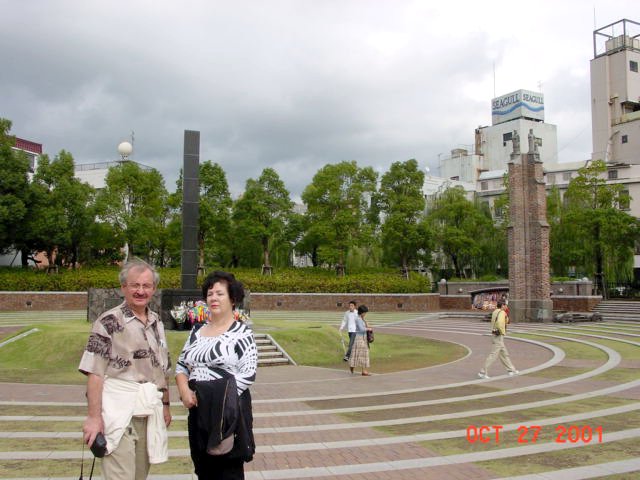
 Der Atombomben Hypocenter-das ist das Zentrum der Detonation

The Atomic Bomb Hypocenter-this is the center of the Explosion

Photo:   Hal Schwartz

ATOMIC BOMB HYPOCENTER

The bomb was dropped from 30 000 Ft  ( 9 KM ) and exploded 500 Meter above Matsuyama-Machi, the northern part of Nagasaki

Einwohner - Population                                                                   240 000

Tote - Dead                                                                                       73 884

Verletzte - Injured                                                                             74 909

Radius der Zerstörung  - Radius of destruction                             4 KM

Zerstörte Häuser - Houses damaged                                             18 409


Zum vorherigen Artikel

Home

Zum nächsten Artikel

[Coldwarhistory-W.I.Juretzko] [Biography] [Profile] [History] [Cold War] [Articles] [Publications] [Photos] [Exhibitions] [Links]

RadioPiekary