|
|
|
|
|
|
The Hollow Nickel
This is one of the more intriguing cases of espionage in the history of the United States. Not necessarily because of the
methodology used by the government that was doing the espionage but because the final solution to the puzzle that had been presented.
The newsboy delivered the papers every day of the week and
then once a month was obligated to collect on the bill. This was that day and the newspaper boy’s name was Jimmy and his client didn’t have exact change and gave him a dollar. Jimmy couldn’t change
the dollar and knocked on the door across from that of his client and asked the woman that answered if she could change a dollar. She was polite, went to her purse and soon returned with the exact change. Jimmy gave
his client the correct change and kept the residual amount to pay the bill.
Jimmy was playing with the change in his pocket when he noticed that one of the coins was relatively very light. He pulled it out of
his pocket, it was a nickel he accidentally dropped it to the floor. Amazingly, the nickel burst into two section and inside he saw a miniature photograph and a picture of a column of numbers. Jimmy realized
immediately that there was something very wrong with the nickel and what was in it and turned it over to a friendly neighborhood cop who was the father of a girl he went to school with. The cop in turn gave it to
the Federal Bureau of Investigation (FBI) who immediately realized that the coin had something to do with espionage and began an investigation.
It was late June of 1953 and among the revelations made by the FBI
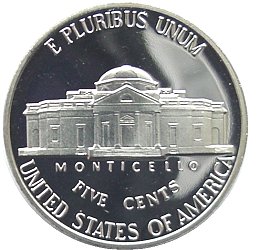
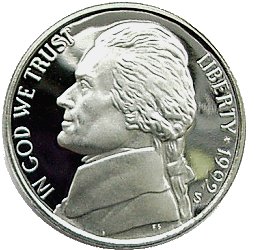
were the fact that the numbers had been printed by a foreign typewriter whose origins were unfamiliar. The coin itself was a composite of two nickels,one was the “war nickel”, rich in silver which was
produced during World War II on the reverse and in front was a nickel dated 1948 with a small hole drilled through the “R” in the world “Trust”. Cryptologists were brought in to no
avail, the women that gave the change could not recall where they got it, magic shops in the entire city were canvassed to see if it was the work of any local magicians. All were dead ends. During the next
four-years, the coin had a top priority from the FBI but all of its efforts resulted in dead ends.
|
|
|
 |
|
|
 |
|
|
|
The mystery started to unravel when a Lieutenant colonel of the Soviet State Security Service, who had been stationed in the
United States under a false identity to spy on this country, determined that he was not interested in going back to the mother Russia and could he stay in the States. The FBI didn’t have to wait too long to
give him the thumbs up and started the debriefing process. Reino Hayhanen had turned and we were the only ones that knew it. Hayhanen explained to the FBI that the hallowed out coins were latterly de rigueur
relative to Russian intelligence operatives. The FBI broke the code that had been used and although the information in the original nickel was anti-climatic four years later, it was a major intelligence coup.
However, Hayhanen was extremely cooperative with the American Government relative to helping them get to the hierarchy of the Russian espionage ring in this country and eventually led them to an ever widening
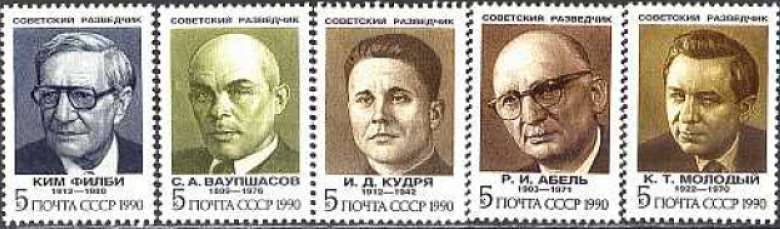
network of higher ranking Russian spies. Eventually, the trail led all the way to the top when on May 28, 1957, they ran across a purported Russian agent by the name of Emil R. Goldgus, or Martin Collins as he was
known as. However, he was also known as Andrew Kayhotis but when agents got down to the serious questioning they found out that he was really Rudolf Ivanovich Abel or the infamous Colonel Abel the top ranking
Russian Spy in the United States. He was given a prison sentence of 30-years in jail. At that time, he was the highest ranking Soviet espionage agent ever captured and was in charge of all undercover activities in
the United States that were not diplomatically protected. Abel was also in charge of espionage activities in Brazil, Mexico and Argentina. You may remember the rest of the story. The Russians asked what we wanted in
exchange for this prime morsel and we told them to shove it. Of course that was only until one of our U-2 pilots; Francis Gary Powers was shot out of the sky over Moscow and with great fanfare, dragged feet first
into a Russian jail. The Russians once again went to the bargaining table, but this time they had very substantial negotiating material. A deal was struck, Abel for Powers, the highest ranking exchange of
prisoners probably in the history of the United States. The newspaper boy would have been proud to know that this was a result of his diligence.
|
|
|
|
|
DER HOHLE NICKEL
Dieses ist eines des faszinierernsten Spionagefalles in der Geschichte der Vereinigten Staaten von Amerika. Nicht, notwendigerweise wegen
der angewandten Methode der ausführenden Spionagemacht, sondern mehr des Ausganges des Resultats, welches dieses Rätsel zur Endlösung führte.
Jimmy, der Zeitungsausträger, lieferte wie stets jeden Tag die
Zeitung vor die Haustür. Einmal im Monat dann, kassierte er die Rechnung von seinen Kunden. Dieses Mal fehlte ihm das Kleingeld um den vom Kunden ausgehändigten Dollarschein zu begleichen. Er erinnerte sich
jedoch, das die ältere Dame in der Wohnung gegenüber im selben Korridor einen Beutel voller Münzen hatte. Er ging zurück, klopfte an die Wohnungstür und bat die alte Dame ihm den Geldschein zu wechseln. Die
freundliche Dame wechselte den Geldschein. Jimmy kehrte zu seinem Kunden zurück, erstattete ihm den fehlenden Betrag und behielt den Rest des Geldes.
Beim Heimgang spielte Jimmy mit den Kleingeld in seiner
Hosentasche. Dabei fiel ihm auf, dass eines dieser fünf Cent Münzen, auch Nickel genannt, im Gewicht sich sehr leicht anfühlte. Er zog den Nickel aus der Hosentasche heraus. Dabei entgleitete dieser aus seiner
Hand und fiel auf den Boden. Beim Aufprall auf den Boden, zerfiel der Nickel gespalten in zwei Teile. Erstaunt bemerkte er das die eine Hälfte des Nickels, eine Miniphotographie mit einer Zahlenreihe enthielt. Er
begriff sofort das mit dieser Angelegenheit etwas nicht stimmte. Jimmy benachrichtigte den Vater einer Schulfreundin welcher ein Polizist war. Dieser übergab den Nickel mit Inhalt dem FBI, welcher sogleich ohne
Zweifel erkannte, das es sich hier um einen Spionagefall handelte.
Es war Ende Juni 1953. Eine intensive Untersuchung begann. Die Feststellungen des FBI ergab, das der Text in kyrillischen Buchstaben
geschrieben war und Staatsgeheimnisse behandelte. Die Münze selbst war eine Montage von zwei verschiedenen Nickeln. Die eine ausgehöhlte Hälfte war der sogenannte „Kriegsnickel“ welcher zum grössten Teil aus
Silber bestand und während des Zweiten Weltkrieges im Umlauf war. Die andere Hälfte war ein 1948 geprägter Nickel. Der Buchstabe „R“ des Wortes“Trust“, enthielt ein klein gebohrtes Loch.
Die Anstrengungen der Kryptologen das Rätsel zu lösen verliefen erfolglos. Die alte Dame konnte sich auch nicht erinnern wo und bei welcher Gelegenheit sie diese Münze erhielt. Alle Münzgeschäfte in der
Stadt wurden systematisch durchgekämmt und man erwähnte sogar ob es sich hier, nicht um einen Trick eines Zauberkünstlers handelte.
Alle Bemühungen verliefen in einer Sackgasse. Während der folgenden vier
Jahre löste die Untersuchung der Münze die höchste Priorität der FBI aus.
Ihr Kraftaufwand war ohne Erfolg.
Das Geheimnis fing an sich langsam zu lösen, als ein in den Staaten stationierter
Oberstleutnant des sowjetischen Geheimdienstes (KGB), der US Spionageabwehr zu verstehen gab, das er an einer Rückkehr ins „Mütterchen Russland“ nicht mehr besonders interessiert war.
Reino Hayhanen,
welcher hier unter einer falschen Identität Spionagetätigkeiten ausführte, gab dem FBI zu verstehen dass, das Prinzip eines ausgehöhlten Nickels eine Form der KGB Nachrichtenübermittelung darstellte.
Durch den Überlauf dieses Agenten, auch wenn die Information bezüglich des ausgeholten Nickels vier Jahre alt war, verzeichnete die FBI einen sichtlichen Erfolg. Hayhanen’s Zusammenarbeit mit dem FBI war
ausserordentlich positiv und führte immer weiter und in höhere Stufen des existierenden Spionagenetzes des KGB. Endlich, am 28.Mai 1957, führte die Spur zu der Spitze als diese bei einem sogenannten Emil R.
Goldfus oder Martin Collins, endete. Er war ebenfalls als Andrew Kayhotis bekannt. Als die Ermittler jedoch wirklich durch die mysteriöse Wand brachen, entdeckten sie das es sich hier in Wirklichkeit um Rudolf
Iwanowich Abel handelt. Dem berühmten Oberst Abel, dem russischen Meisterspion in den USA. Er wurde zu dreissig Jahren verurteilt. Er war der höchstrangigste sowjetischer Spion, welcher in der USA jemals gefasst
wurde. Seiner Verantwortung unterlagen alle Spionagetätigkeiten in der USA, welche nicht diplomatisch beschützt waren. Oberst Abel war ebenfalls für die Spionagetätigkeiten in Brasilien, Mexiko und
Argentinien verantwortlich.
Der eigentliche Ausgang der Geschichte ist ja am Ende bekannt. Auf Hinter-und Umwegen versuchte die Sowjets immer wieder zu erfahren welcher Preis annehmbar wäre um Abel’s
Freiheit zu erlangen. Unsere Antwort kam stets und immer der des „Goetz von Berlichingen“ nahe. Natürlich galt diese Antwort nur bis zu dem Zeitpunkt, als einer unser U2- Piloten, Francis Powers, aus den
Wolken über Moskau heruntergeschossen wurde und in einem russischen Gefängnis landete.
Wieder setzten sich die Russen an den Verhandlungstisch. Dieses Mal jedoch brachten sie eine Trumpfkarte mit in die
Gesprächsrunde. Ein Kompromiss des Gefangenenaustausches wurde erreicht.
Abel für Powers!
Wahrlich, der höchstrangigste Gefangenenaustausch in der Geschichte der Vereinigten Staaten.
Dem Zeitungsjungen Jimmy würde die Brust
voller Stolz anschwellen wenn er wissen würde das dieser Ausgang des Resultats seiner Aufmerksamkeit zuzuschreiben ist.
|
|