|
|
|
 |
|
|
THE WHISKY-VODKA-LINE
On May 8, 1945, at the conclusion of World War II in Europe, allocating land
within Germany for purposes of military control among the Soviet Union and the Western Allies did not end at the Potsdam Conference, as commonly believed. The discussions for apportioning
land among the Allies included complex issues and the division of Germany into various “Zones” was not reached in a harmonious manner, but was more the result of heated disagreements among
the Soviet and Western Allies that the participants became so exhausted that important details were overlooked.
One of the most important details that were overlooked was what has become known
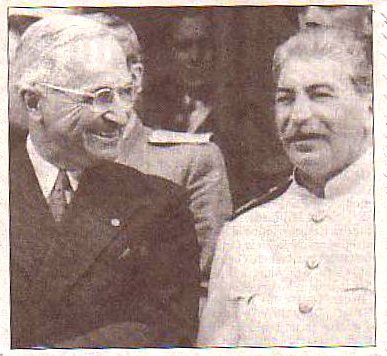
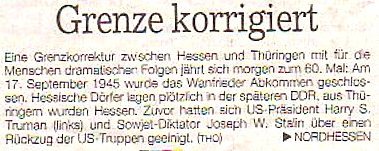
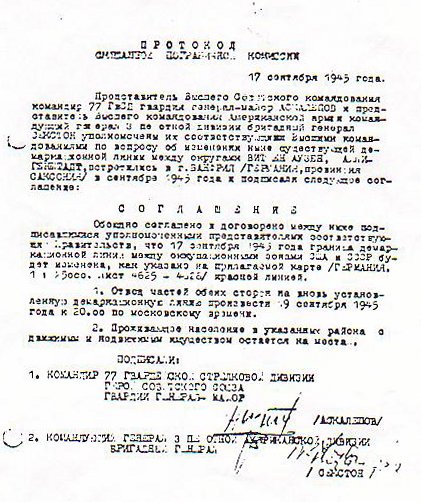
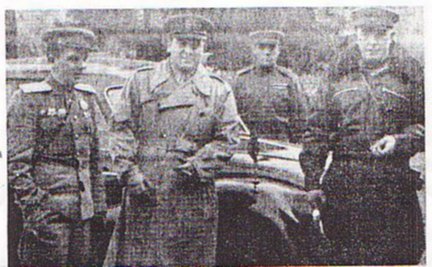
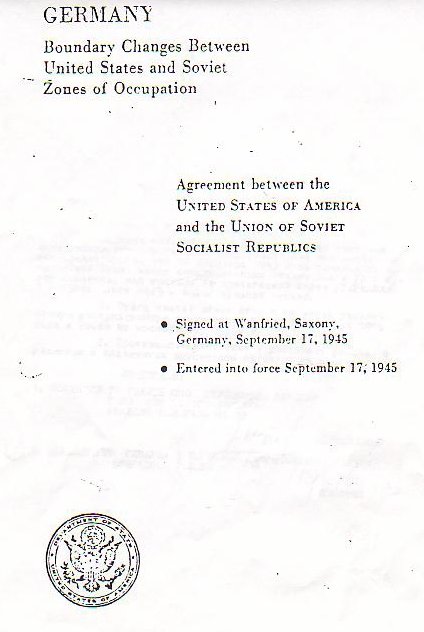
as the “Whisky-Vodka Line”, which was the result of the Wanfried Agreement dated September 17, 1945. The primary negotiator of the Wanfried Agreement was Captain Michael Burda of the
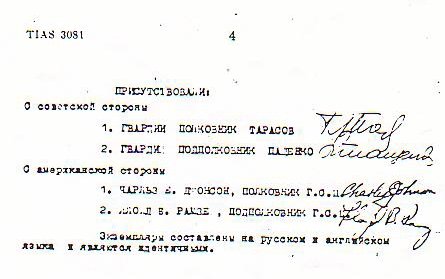
United States Army. The Wanfried Agreement was signed by General W.T. Sexton on behalf of the United States and was signed by General Vasili S. Askalepov on behalf of the Soviet Union.
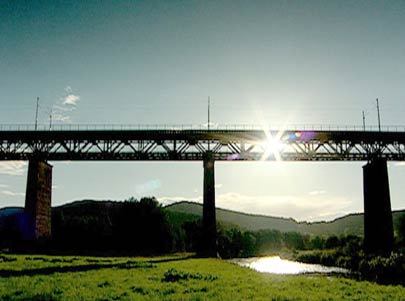
The Wanfried Agreement essentially resolved a heated dispute over 2.7 miles of railroad tracks that served as an important supply line for American military forces located in the southern portion of
Germany. The Wanfried Agreement essentially included the exchange of two villages in the State of Thuringia, which was part of the Russian Zone of Germany for five villages in the State of Hesse,
which was part of the American Zone.
Shortly after the Potsdam Conference, which formally concluded World War II, it was discovered that about 2.7 miles of railroad tracks ran through the Russian
Zone. The alliance between the Soviets and the Western Allies, particularly America, was never amicable and was put to a severe test and a war of nerves ensued over the following
months. Josef Stalin, who was portrayed by the West, to the Western public as “Uncle Joe”, clearly demonstrated to the world by his behavior on this issue that his ambitions
to conquer the globe for his socialist aims was still intact.
The Soviet-American confrontations over the 2.7 miles of railroad tracks began almost immediately after the signing the Potsdam
Agreement. Soviet forces controlled and blocked a 2.7 mile section of this important railway, which American military forces used to transfer supplies from the port city of Bremerhaven, located on
the North Sea, to the American Zone, which was located in the southern part of Germany. It is important to note the Americans had wisely secured the use of this important railway
through the British Zone, which served to enhance the goodwill nature of the Americans and British in their respective roles in the Western Alliance.
As supply and transportation trains traveled
through this 2.7 miles of railway through the Russian Zone, Red Army troops forced the trains to stop and robbed them of important supplies needed by American troops in southern Germany. In
addition to the plundering of important supplies for American troops, the raping and the disappearance of European passengers on the trains by Red Army troops were a daily occurrence. Things
digressed to the point where the stealing of goods and freight from rail cars occurred in broad daylight.
In order to correct this problem and cool down the escalating tensions between the Soviets
and the Western Allies, high ranking military commanders met at the noble estate of “Kalkhof” in the State of Saxony. The purpose of the meeting was to negotiate an exchange previously
agreed upon land in the various Soviet and American Zones so the 2.7 miles of supply railway would be moved exclusively into American zone.
Upon the successful agreement of the exchange of villages,
at the conclusion of the meeting between Generals Sexton and Askalepov, they exchanged a bottle of whisky and vodka. It was this exchange that resulted in what history has now labeled as the
Whisky- Vodka Line.
The signatures have placed the city of Wanfried in Saxony. In fact the city of Wanfried is located in the State of Hesse.
|
|
|
|
|
DIE WHISKY-VODKA-LINE
Der 8. Mai 1945 brachte das Ende des 2. Weltkrieges in Europa. Die Aufteilung des Deutschen
Reiches durch die Siegermächte wurde nicht, wie so irrtümlich angenommen, auf der Potsdamer Konferenz restlos abgeschlossen.
Die Zerteilung Deutschlands in verschiedene Besatzungs- und
Verwaltungszonen war nicht das Resultat eines harmonischen Übereinkommens der allierten Siegermächte. Im Gegenteil! Eine klare Übereinstimmung der “Grossen Drei”bezüglich der Aufteilung
Deutschlands wurde oberflächlich und in Eile vorangetrieben, welches dann schneller als erwarted, zu Reibereien führte.
Unscheinbare, jedoch wichtige Details wurden überblickt. Eines dieser
wichtigen Details die überblickt wurden, war was später als die Whisky-Vodka-Linie bekannt wurde. Es ist das Ergebnis des Wanfrieder Abkommens vom 17. September 1945. Es wurde ausgehandelt von USA
Hauptmann Michael Burda. Unterzeichnet von General W.T. Sexton für die amerikanische Seite und General Vasili S. Askalepov für die Sovjets. Das Abkommen schloss im wesentlichen den Austausch
von zwei Dörfern in Thüringen, der ein Teil der russischen Zone war, für fünf Dörfer in Hessen welche zur amerikanischen Zone gehörten.
Das Wanfrieder Abkommen löste einen erhitzten
Streit über eine 5,6 Km lange Eisenbahnstrecke welches durch sowjetisches Besatzungsgebiet verlief. Die Amerikaner sicherten sich von den Briten die Eisenbahnstrecke welche ihre Enklave, den
Seehafen Bremerhaven, mit ihrer im Süden Deutschlands liegender Bestatzungszone, verband.
Kurz nach Abschluss der Potsdamer Konferenz im Juni 1945, entdeckten die Amerikaner, das 5,6 Km ihrer
Nachschubline, sowjetisch kontroliertes Gebiet durchliefen.
Die sowjetisch - westliche Allianz war eigentlich nie von einer bedeutenden freundlichen Atmosphäre geprägt. In den folgenden Monaten
nahm der Nervenkrieg zwischen den einst Verbündeten zu. Mehr und mehr wurde jetzt, Josef Stalin,der während der Kriegszeit noch liebevoll im Westen als der “good uncle Joe”, porträtiert war,
dem Westen abstoßender. Er (Stalin) demonstrierte deutlich der Welt durch sein Verhalten, das sein Ehrgeiz, den Erdball für seine sozialistischen Ziele zu erzwingen, noch intakt war.
Die russisch -
amerikanische Konfrontation in dem 5,6 Km langen Gleisgebiet began sofort nach dem Unterzeichnen des Potsdamer Abkommens. Die Rote Armee zwang den Zugverkehr zum halten. Es verblieb nicht nur bei den
üblichen Kontrollen. Die Ausplünderung der Reisenden, das Berauben von Gütern, Vergewaltigungen und das Verschwinden von Personen wurde zur alltäglichen Begebenheit. Jegliche Ordnung und Normalität
zerfiel zusehens und der Diebstahl von Hab und Gütern geschah bei offenen Tageslicht.
Um diesen Zustand zu beseitigen und zugleich die entstandenen Spannungen zwischen Russen und Amerikanern
abzukühlen, traffen sich hochrangige Offiziere beider Seiten.
Sie trafen sich, und verhandelten auf dem Rittergut Kalkhof in Wanfried. Das bei diesem Treffen erreichte Resultat, ein Strich auf der
Landkarte, bestand in einem Gebietsaustausch, welcher die 5,6 Km lange Bahnlinie, aus der russischen in die amerikanische Zone verlegte.
Zum Abschluss der erfolgreichen Abmachung welches das
Schicksal der sieben in Frage gestellten Dörfer besiegelte, beschenkten sich General Sexton und General Askalepov, gegenseitig mit einer Flasche Wisky und Vodka. Es war diese Begebenheit des
Geschenkaustausches von Whisky und Wodka, welche bis zum heutigen Tage die neu erichtete Grenze zwischen den Besatzungszonen, die Whisky-Vodka-Linie, benannte.
In den angeführten
Verhandlungsprotokolen der Siegermächte, wird die Stadt Wanfried als im Land Sachsen gelegen, bezeichnet. Wanfried gehört dem Land Hessen zu.
|
|
|
|
|
|
Whiski-Wódka linia
W dniu 8 Maja 1945 zakończyła się druga wojna światowa. Podział Niemiec przez zwycięską
aliancję nie został ostatecznie dokonany po Poczdamskiej Konferencji, jak fałszywie mniemano. Podział Niemiec nie był owocem zgodnej współpracy zwycięskiej aliancji.
W przeciwieństwie tego podział Niemiec był tylko powierzownie i szybko załatwiony, co szybciej niż
oczekiwano do zatarć doprowadziło. Niepozorne ale bardzo ważne detale zostały niezauważone. Jeden z takich ważnych punktów został później jako ta “Whiski-Wódka”
linia nazwany. To był owoc Porozumienia w Wanfried w dniu 17 września 1945 r.
Porozumienie to było przeprowadzone przez Kapitana Burdę ze strony amerykańskiej i podpisane przez
generała W.T.Sextona i przez generała Vasilija Askalepowa z strony rosyjskiej. Porozumienie to zawierało głównie wymianę terenów z dwoma wioskami w Turyngii które były do tego
czasu strefą rosyjską, w zamian otrzymali rosjanie obszar Hesji na którym sie 5 wiosek znajdowało i które do tego czasu w amerykańskim sektorze leżały.
Porozumienie z Wanfried zostało powołane z powodu ostrego sporu o około 5,6 km długi odcinek lini
kolejowej która przebiegała przez tą część rosyjskiej strefy. Amerykanie zapewnili sobie od Brytyjczyków ten kawałek lini kolejowej która lączyła port w Bremerhaven ze
strefą amerykańską na południu Niemiec.
Krótko po zakończeniu Poczdamskiej Konferencji zauważyli amerykanie że jedna część ich lini
kolejowej przez rosyjską strefą przebiega.
Aliancja rosyjsko - zachodnia niy była w zasadzie w zbyt przyjaznej atmosferze. W następnych miesiącach
nasiliła się ta konfrontacja między byłymi aliantami. Coraz bardziej był ten dotychczas po wojnie jako ten “dobry wujek Joe” zwany dotychczas Stalin, był teraz zachodowi
cotaz bardziej wstrętny. On (Stalin) demonstrował reszcie świata przez swoje zachowanie swoją wolę - wszystkim swoją socjalistyczną ideologię narzucić.
Konfrontacje amerykańsko-rosyjskie na tym odcinku 5,6 km torów kolejowych zaczęły się zaraz po
podpisaniu porozumienia w Poczdamie. Armia czerwona zatrzymywała pociągi, i nie skończyło się na zwykłych kontrolach, rabunku podróżujących, rabunku przewożonych towarów,
gwałtów i porywanie ludzi były na porządku dziennym.
Wszelki porządek i normalne warunki przestały istnieć, kradzieże były nawet za dnia przeprowadzane.
Zeby takie warunki i napięcia między stroną amerykańską i rosyjską zlikwidować i
ochłodzić, spotkali się wysocy oficerowie obu stron.
Trafili się oni na rycerskiej posiadłości Kalkhof w Wanfried.
Resultat tego spotkania - linia na mapie - miała na celu wymianę obszaru strefy rosyjskiej na którym
ta sporna linia kolejowa przebiegała, w zamian za obszar strefy amerykańskiej.
Na zakończenie tej pomyślnej wymiany która przypieczątowała los tych siedmiu wiosek, obdarowali
się generał Sexton i generał Askalepow po butelce whiski i wódki.
To była ta okoliczność wymiany whiski i wódki która do dnia dzisiejszego tą nową granicę
między strefami przypieczętowała i została dlatego jako “Whiski-Wódka Linia” nazwana.
W tych protokołach porozumienia w Wanfried jest to miasto określone że leży w rejonie Saksoni.
Miasto to ale należy do rejonu Hesji.
|
|